PARACODING

Decoding complex systems as physics, not religion — and building the next ones by supervising AI. A book series by Scott McDonald.

The idea

Two hemispheres, one method

The logo says it: a blue analytical half and a green generative half, joined. Paracoding is what happens when a human sits between them — directing reasoning models and building models like a foreman, not a typist. The books apply that same lens to hard problems: strip away the ideology, find the mechanism, and show the work.

The series

Two books, so far

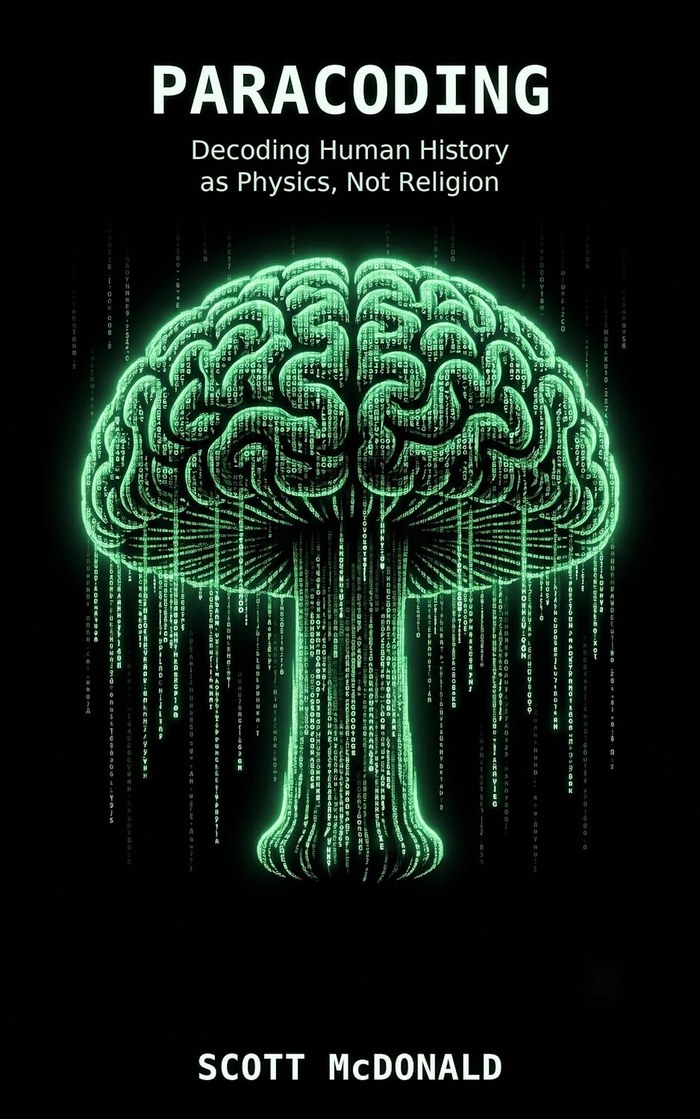
PARACODING Book 1 cover - Decoding Human History as Physics, Not Religion by Scott McDonald
On Amazon now

Decoding Human History as Physics, Not Religion

The series opener turns the lens on us. Instead of treating history as a story of heroes, villains, and destiny, it reads civilization the way you'd read a system — incentives, energy, feedback loops, and constraints. Not what people believed, but what the mechanism actually did.

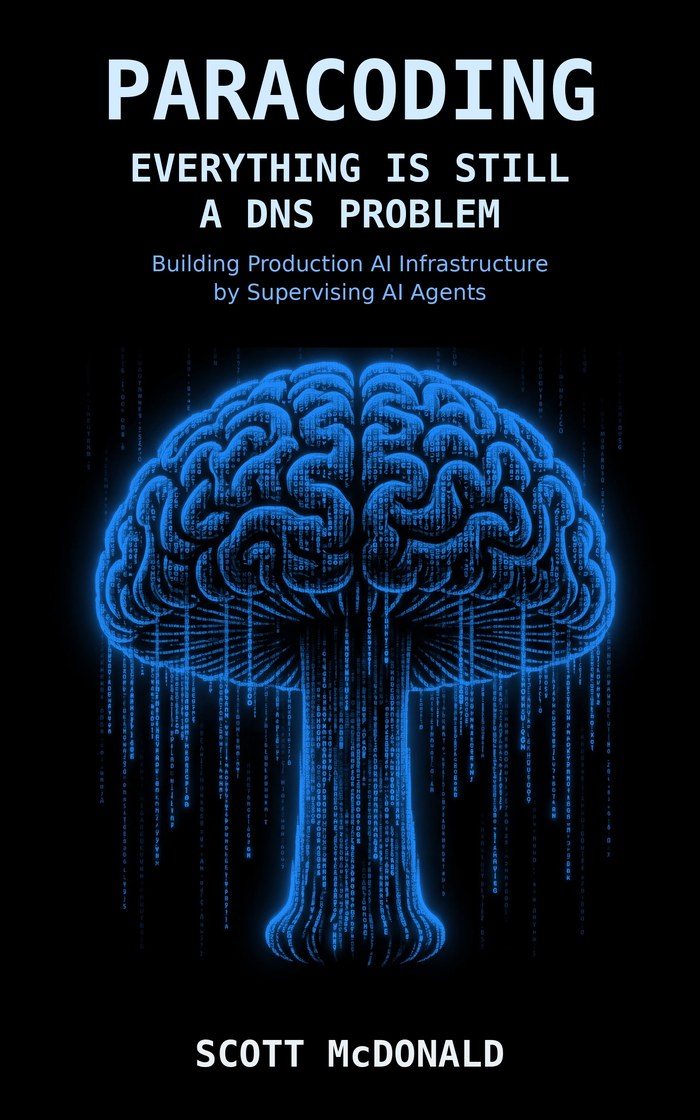
PARACODING Book 2 cover - Everything Is Still a DNS Problem by Scott McDonald
Free now · print in review

Everything Is Still a DNS Problem

The field journal of building GPU HA — high-availability failover for AI inference — by supervising AI agents. What broke, what it proved, and what "verify, don't claim" actually costs. Twenty years after DNS failover kept websites alive, the same question comes back for GPUs. It's free and DRM-free while the paperback and Kindle editions are in review.

The method

How Paracoding books get built

A human supervisor, a reasoning model as architect, and a browser-driving model as engineer. Briefs are the interface; anything irreversible is human-gated; credentials never pass through an agent. Book 2 is the method documenting itself.

Human in the loop

Decisions, approvals, and credentials stay with the person. The supervisor sets direction and pulls the irreversible levers.

Architect + engineer

One model designs and reviews; another drives the console and runs the commands. Separation of concerns, applied to agents.

Verify, don't claim

Every result is checked against reality, not asserted. The rule that most improved outcomes — for the models and the human alike.